
First Live, Then Write
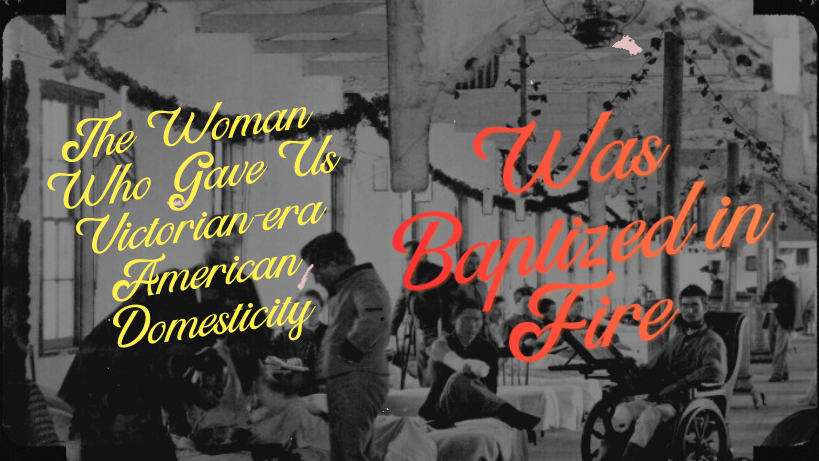
The woman who gave us Victorian American domesticity was baptized in fire. In December 1862, Louisa May Alcott walked into a building full of dying men and went to work.
She was thirty. No formal training. A few Florence Nightingale texts and a stated plan: First live, then write.
The Union Hotel Hospital in Georgetown (the Hurly Burly House, patients called it) had been a hotel before the war requisitioned it. Alcott arrived three days into the job when forty ambulances pulled up in the gray dawn, unloading the wreckage from Fredericksburg. She looked out the window at what she'd initially taken for market carts:
The sight of several stretchers, each with its legless, armless, or desperately wounded occupant, entering my ward, admonished me that I was there to work, not to wonder or weep; so I corked up my feelings, and returned to the path of duty.
Hospital Sketches, published in 1863 from her letters home, was her first real success. She later said it showed her her style. In it she wrote about men riddled with shot and shell, so torn and shattered, nor have borne suffering for which we have no name. Sharp, direct, unsparing. The prose of someone who had actually been in the room.
Five years later, at her publisher's urging, she wrote Little Women. She wasn't enthusiastic. She once admitted she had "never liked girls or known many, except my sisters." She wrote it anyway, became Aunt Jo to the American reading public, and the war nurse disappeared.
My take: Little Women is a great book. But it was written by a woman who had stood in a hallway full of Fredericksburg casualties three days into her first job and corked up her feelings and gone back to work.
